

NordVPN is the best VPN for torrenting for most users, particularly if you want high sustained download speeds, P2P-capable servers, and protection against exposing your normal IP address when a torrent client is left running for long periods. ProtonVPN is the more interesting option when port forwarding is important to your torrent setup, while Private Internet Access combines port forwarding with extensive configuration options for dedicated torrent clients.
The important distinction with torrenting is that BitTorrent does not behave like ordinary web browsing. A torrent client establishes connections with many peers, may continue transferring data for hours, and can expose the IP address participating in a swarm to other peers. A fast torrenting VPN therefore needs more than a good headline speed test: stable long-duration throughput, dependable leak protection, P2P support, and predictable behavior if the VPN tunnel disconnects are substantially more important.
Best VPNs for torrenting compared
| VPN | Best torrenting use case | What makes it relevant | Rank |
|---|---|---|---|
| NordVPN | Best overall | Fast P2P transfers, dedicated P2P server handling, NordLynx, and strong disconnect protection | #1 |
| ProtonVPN | Port forwarding | Port forwarding can improve inbound peer connectivity on supported configurations | #2 |
| Private Internet Access | Advanced torrent clients | Port forwarding plus configurable protocols and connection parameters | #3 |
| Surfshark | Multiple torrenting devices | Useful when several computers or other devices need simultaneous VPN connections | #4 |
| ExpressVPN | Simple high-speed setup | Lightway and broad P2P support minimize the amount of manual configuration required | #5 |
| CyberGhost | Dedicated torrenting servers | Desktop apps identify servers intended for downloading and P2P traffic | #6 |
| IPVanish | General P2P use | Suitable when torrenting is part of a broader multi-device VPN setup | #7 |
Why torrenting puts different demands on a VPN
Opening a normal website usually involves a relatively small number of connections to known servers. BitTorrent works differently because your client participates in a peer-to-peer swarm and can communicate with many different peers during one download.
That creates several torrent-specific requirements:
- Swarm IP exposure: other peers can see the IP address your torrent client uses to participate in the swarm.
- Long-running connections: torrent transfers may remain active long after you stop actively using the computer.
- Inbound connectivity: port forwarding can affect how easily other peers establish incoming connections to your client.
- Sustained throughput: short speed-test bursts do not necessarily predict performance during a multi-gigabyte torrent.
- Disconnect behavior: an unexpected VPN failure matters more when a torrent client continues transferring automatically.
Suppose qBittorrent is downloading through a VPN and the tunnel unexpectedly fails. If the torrent client is allowed to fall back to your normal network interface, peer connections can subsequently originate from your ordinary public IP address. The VPN may have worked correctly for the first 90% of the transfer yet still fail the torrenting use case at the moment protection disappears.
This is why the best torrenting VPN should not be ranked primarily by total server count or how many streaming services it accesses. P2P policy, sustained speed, kill-switch behavior, interface binding, port-forwarding availability, and the stability of the VPN during long transfers are more useful criteria.
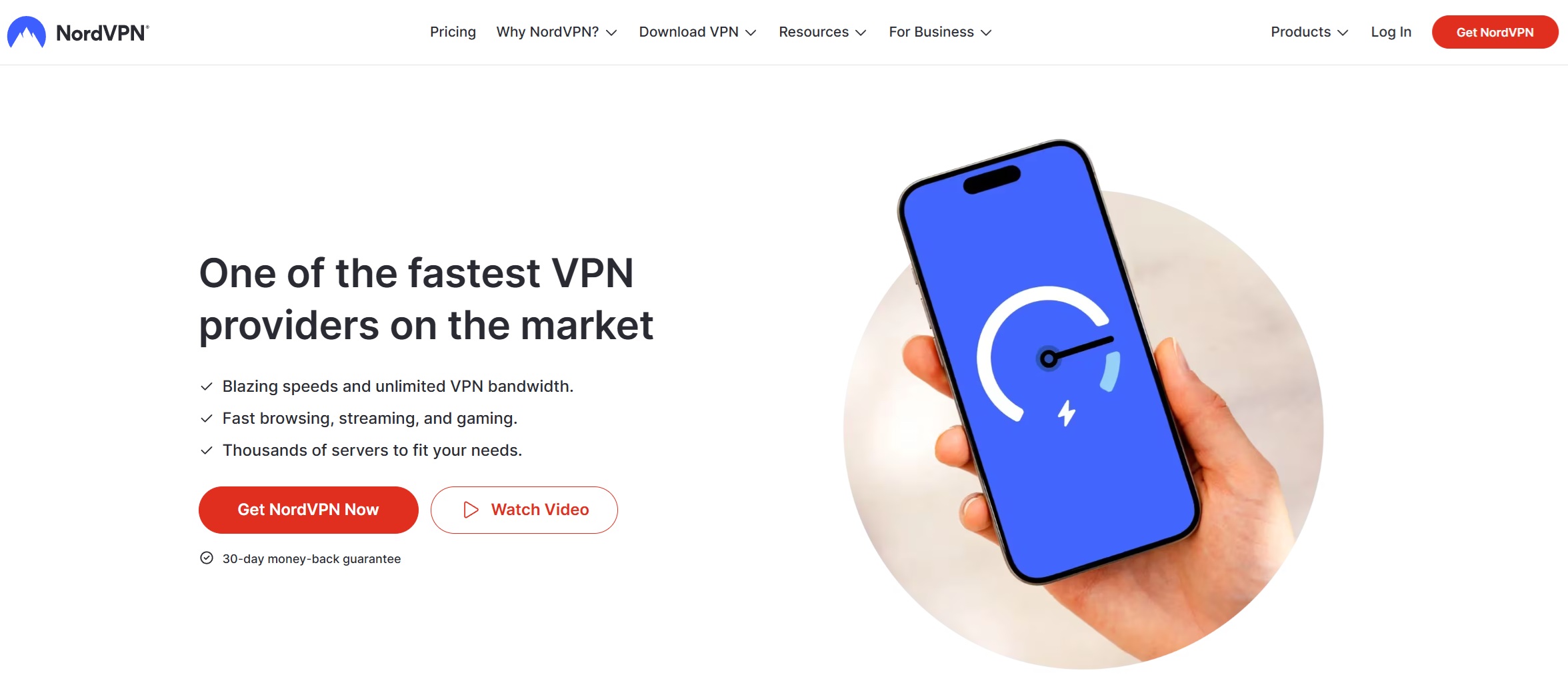
1. NordVPN – best VPN for torrenting overall

NordVPN takes first place because its combination of NordLynx, P2P-capable infrastructure, and disconnect protection matches what matters during actual torrent transfers rather than only during short browser sessions.
NordVPN can direct P2P traffic toward servers intended to handle it, which removes some of the uncertainty around selecting an unsuitable endpoint. For normal torrenting, we would generally start with NordLynx and a geographically nearby P2P server. Long physical distance to the VPN endpoint adds latency and can reduce the maximum practical throughput without providing an inherent torrenting advantage.
The kill switch is particularly important if your torrent client remains open unattended. If the VPN connection fails while peers are still exchanging data, allowing the client to immediately continue over the normal network defeats one of the main reasons for routing BitTorrent through a VPN.
NordVPN is less compelling if port forwarding is a mandatory part of your configuration. Users specifically optimizing inbound peer connectivity should look more closely at ProtonVPN or Private Internet Access.
Best fit: users who prioritize fast sustained torrent downloads, straightforward P2P server selection, and strong protection against accidental fallback to the normal connection.
2. ProtonVPN – best torrenting VPN for port forwarding

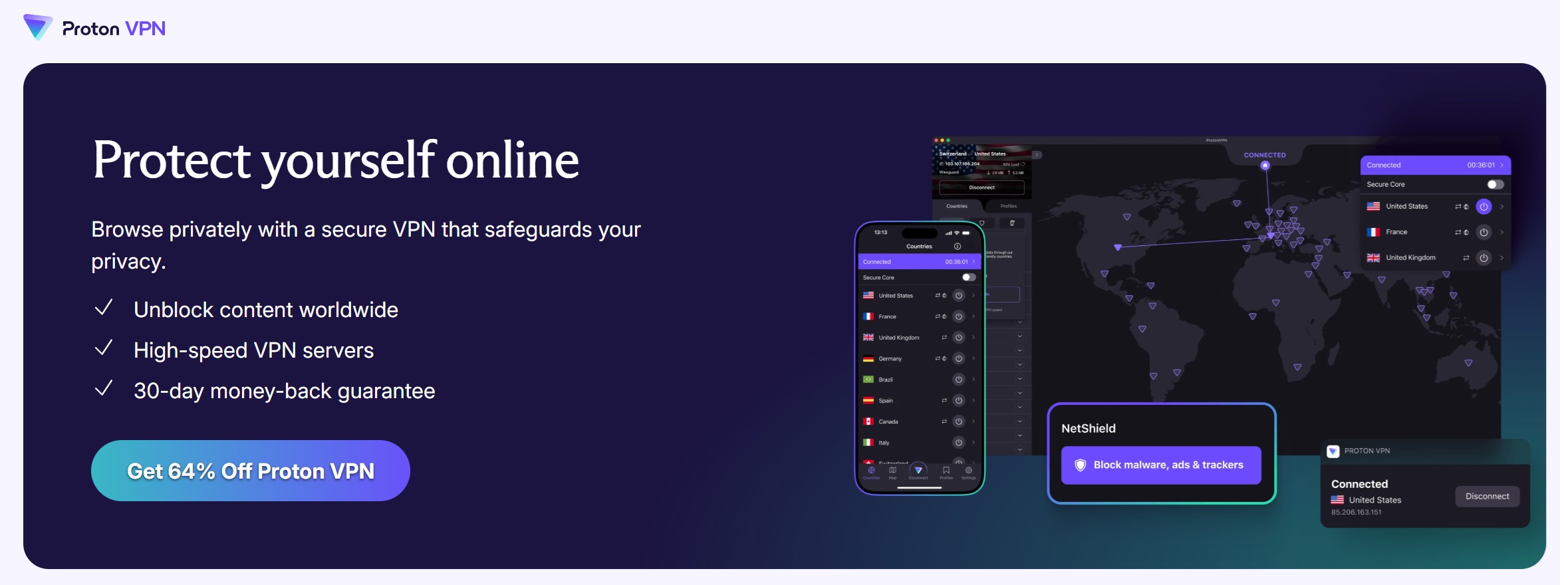
ProtonVPN becomes particularly interesting for BitTorrent users because its paid service supports port forwarding on compatible platforms and servers.
Port forwarding addresses a genuinely torrent-specific issue. Without an externally reachable forwarded port, your client can still initiate connections to other peers and torrents may work perfectly well. With an open incoming port, however, peers that cannot accept inbound connections themselves have another way to connect to you.
That can improve peer availability, particularly on swarms where connectivity is more limited. The benefit should not be confused with a guaranteed percentage increase in download speed: performance still depends on the swarm, available seeders, peer upload capacity, and the torrent client’s connection behavior.
For qBittorrent and similar clients, the forwarded port should correspond to the listening port configured in the application. If ProtonVPN assigns a different forwarding port after reconnecting, the torrent-client configuration may also need to reflect that change.
Best fit: users running qBittorrent or another configurable BitTorrent client who specifically want incoming peer connectivity rather than simply the fastest plug-and-play VPN.
3. Private Internet Access – best for advanced torrent-client setups

Private Internet Access is better suited to torrent users who actually want to configure the network path rather than treating the VPN as a single Connect button.
Its relevance comes from the combination of P2P support, port forwarding on supported locations, and granular VPN settings. This makes PIA useful when you are trying to optimize a dedicated qBittorrent, Transmission, Deluge, or similar installation.
The most useful distinction is between VPN configuration and torrent-client configuration. Changing protocols or connection parameters in PIA affects the encrypted tunnel, while changing the listening port, peer limits, or network interface inside qBittorrent affects how the BitTorrent client communicates through that tunnel.
PIA therefore rewards users willing to test one variable at a time. If downloads are slow, changing VPN server, protocol, torrent listening port, and peer limits simultaneously makes it difficult to identify which component was actually responsible.
Best fit: torrent users who want port forwarding and more control over how their dedicated BitTorrent client interacts with the VPN connection.
4. Surfshark – best when you torrent on several devices

Surfshark makes the most sense when torrenting is distributed across several devices rather than concentrated on one carefully optimized workstation.
Its unlimited simultaneous-device model is relevant if a household has a desktop running qBittorrent, a laptop used for occasional P2P transfers, and several other devices that also need the VPN. You do not have to reserve one of a small number of connection slots for the torrenting machine.
For raw torrent speed, we would begin with WireGuard and a nearby server rather than deliberately selecting a distant location. The BitTorrent swarm already introduces many separate connections; adding unnecessary distance between your computer and the VPN gateway can create another bottleneck before that traffic even reaches the peers.
Surfshark does not replace a properly configured torrent kill-switch strategy. Users running torrents unattended should verify what happens when the tunnel disconnects instead of assuming that an active VPN icon guarantees the torrent client can never use another interface.
Best fit: households or users with several computers and devices where torrenting is only one part of a larger simultaneous VPN deployment.
5. ExpressVPN – best for a simple fast torrenting setup

ExpressVPN is a better fit for torrent users who want P2P traffic to work without maintaining a complicated server or protocol configuration.
Lightway is the natural starting point because torrent performance is often constrained by sustained VPN throughput. Unlike loading a webpage, where a short delay may barely matter, transferring tens of gigabytes turns even a moderate throughput reduction into substantially more download time.
ExpressVPN’s main limitation for a specialist torrent setup is the lack of conventional port forwarding in its standard desktop VPN workflow. That does not prevent downloading torrents, but users specifically trying to maximize inbound peer reachability have stronger options elsewhere in this list.
We would therefore position ExpressVPN as a low-maintenance torrenting choice rather than an enthusiast BitTorrent configuration platform.
Best fit: users who want fast P2P transfers with minimal configuration and do not require a forwarded listening port.
6. CyberGhost – good if you want torrenting servers clearly identified

CyberGhost is useful for users who would rather have the VPN application identify suitable downloading locations than determine P2P server suitability manually.
The desktop apps can expose servers intended for downloading, making the server-selection process clearer for someone whose primary question is simply which endpoint should be used before starting qBittorrent.
The same geographical principle still applies: selecting the most distant downloading server does not inherently make torrenting safer. If several appropriate locations are available, start with one reasonably close to your actual location and compare sustained transfer rates rather than relying exclusively on latency shown inside the VPN client.
CyberGhost ranks below the more specialist choices because users who want port forwarding and deeper control over inbound peer connectivity have stronger options with ProtonVPN or PIA.
Best fit: users who want an obvious P2P-oriented server-selection workflow without manually building a more advanced torrenting configuration.
7. IPVanish – useful when torrenting is part of a broader device setup

IPVanish makes more sense when your torrent client is one component of a larger VPN setup than when you are building a specialist seedbox-style configuration.
For example, the same subscription can be used on the computer performing the torrent transfer while also covering laptops, phones, or other compatible devices. The torrenting requirement remains stable P2P throughput and protection against fallback to the normal route.
We would rank IPVanish below ProtonVPN and PIA for users focused on inbound torrent connectivity because those services provide more relevant port-forwarding functionality. It is still a practical option when your requirement is straightforward P2P use rather than maximizing connectability in every swarm.
Best fit: users who want one VPN service across many devices and need ordinary torrenting support without advanced port-forwarding requirements.
Why your IP address is visible in a torrent swarm
BitTorrent is designed around direct communication between peers.
When you join a torrent swarm, your client needs network addresses for peers capable of exchanging pieces of the file. Depending on the torrent, those peers may be discovered through trackers, the distributed hash table, peer exchange, or other BitTorrent mechanisms.
That means the address participating in the swarm is fundamentally different from an address known only to a website you visit.
| Traffic or identifier | Changed by a VPN? | Relevant to torrenting? |
|---|---|---|
| Public peer IP address | Yes | Yes |
| IP geolocation | Yes | Potentially |
| Torrent listening port | Not automatically | Yes |
| Torrent info hash | No | Yes |
When the VPN is functioning correctly, peers should normally interact with the VPN exit address rather than your ordinary public address. This is why checking only whether a browser shows the VPN IP is incomplete: the more relevant question is which interface and IP address the torrent client itself is using.
Port forwarding vs a normal torrenting VPN connection
Port forwarding deserves separate attention because it changes peer connectivity rather than merely changing the public IP address.
With an ordinary VPN connection:
your torrent client can initiate connections outward, but unsolicited inbound peer connections may not reach its listening port.
With VPN port forwarding enabled, the provider maps an externally reachable port on the VPN side toward your connection. Configuring the torrent client to listen on the corresponding port can make you connectable to a broader set of peers.
This does not mean torrents without port forwarding cannot download quickly. If the swarm contains plenty of reachable peers, an outbound-only client can still achieve excellent speeds. Port forwarding becomes more valuable when peer availability is limited, when seeding is important, or when you specifically want maximum BitTorrent connectability.
Why torrent speeds may fall after connecting to a VPN
A torrent download can be limited at several different points, and the VPN is only one of them.
Common bottlenecks include:
- the upload capacity of seeders and peers;
- the number of useful peers in the swarm;
- your ISP connection;
- the VPN server’s available throughput;
- distance to the VPN gateway;
- VPN protocol overhead;
- torrent-client connection limits;
- lack of inbound connectivity in poorly connected swarms.
A torrent therefore should not be used as a precise VPN speed benchmark unless the swarm itself can supply data faster than your VPN connection.
A better diagnosis is to compare several well-seeded legal test torrents or other authorized P2P transfers while keeping the same client settings. If every transfer is substantially slower through one VPN endpoint but improves immediately on another nearby endpoint, the VPN path becomes a much stronger suspect.
Why a kill switch matters more for torrenting
A browser usually stops generating significant traffic when you close the page. A torrent client can behave very differently.
It may:
- continue downloading while minimized;
- seed completed torrents automatically;
- restart transfers when the computer wakes;
- reconnect to peers after the network changes;
- remain active even when you are no longer watching it.
If the VPN tunnel fails during any of those periods, the torrent client can potentially rebuild peer connections over another available network path unless something prevents it.
This makes disconnect protection a core torrenting requirement rather than a secondary convenience.
Binding qBittorrent to the VPN interface
For qBittorrent users, network-interface binding provides another layer of torrent-specific control.
Under qBittorrent’s advanced network settings, the client can be restricted to a particular network interface. When correctly configured, qBittorrent will use that interface rather than simply selecting whichever internet route the operating system currently considers available.
Conceptually, the difference is:
kill switch = control what the VPN or operating system allows when the tunnel fails.
interface binding = control which network interface qBittorrent itself is allowed to use.
The interface name varies by VPN client and operating system, so it should be identified on the actual machine rather than copied blindly from another guide. Test the configuration by stopping the VPN and confirming that qBittorrent no longer transfers data before relying on it for unattended torrents.
What to do if torrents behave differently with the VPN enabled
The torrent connects but downloads slowly
Start with another nearby VPN endpoint using the provider’s fastest modern protocol. Do not change the torrent client, VPN protocol, listening port, and peer limits simultaneously. A well-seeded torrent should be tested against one change at a time so you can identify whether the bottleneck is the server, protocol, or swarm.
qBittorrent shows zero incoming connections
This does not automatically mean torrenting is broken. Your client can still establish outbound peer connections. If inbound connectivity is important, use a VPN with port forwarding and verify that qBittorrent’s configured listening port matches the forwarded port.
Torrents stop when the VPN reconnects
Check whether your torrent client is bound to an interface that changed when the VPN reconnected. Also confirm that the VPN has restored its tunnel before changing torrent-specific settings.
The VPN disconnects and all torrent traffic stops
That can be the intended result of a kill switch or interface binding. Re-establish the VPN first. The important behavior is that qBittorrent does not silently switch to the ordinary internet route.
One torrent is slow but another is fast
That usually points toward the swarm rather than the VPN. Different torrents have completely different peer populations and available upload capacity. Compare multiple healthy swarms before concluding that the VPN itself is limiting throughput.
Which VPN should you choose for torrenting?
For most users, NordVPN is the strongest overall choice because it combines fast P2P performance, straightforward server handling, NordLynx, and protection suitable for a torrent client that may remain connected for extended periods.
ProtonVPN becomes more compelling when port forwarding is part of the requirement. It addresses inbound peer connectivity, which an ordinary fast VPN connection does not automatically provide.
Choose Private Internet Access if you want both port forwarding and a highly configurable torrenting setup, or ExpressVPN if you prefer a simpler high-speed P2P configuration without managing forwarded ports.
Frequently asked questions
What is the best VPN for torrenting in 2026?
NordVPN is our best overall torrenting pick because its P2P support, NordLynx protocol, sustained performance, and disconnect protection fit the requirements of long-running BitTorrent transfers. ProtonVPN and PIA are stronger choices when port forwarding is specifically required.
Does a VPN hide my IP address from torrent peers?
When the torrent client is correctly routed through a functioning VPN tunnel, other peers should see the VPN exit IP used by the connection rather than your normal public IP. The important caveat is disconnect behavior: if the VPN fails and the torrent client is allowed to use another interface, subsequent peer connections can use that interface instead.
Do I need port forwarding for torrenting?
No. BitTorrent can work without port forwarding because your client can establish outbound connections to reachable peers. Port forwarding can nevertheless improve incoming connectivity and may be particularly useful for seeding or swarms where many peers are not themselves reachable from inbound connections.
Which VPN is best for port forwarding while torrenting?
ProtonVPN and Private Internet Access are the most relevant choices in this list when forwarded torrent ports are important. Make sure the port assigned by the VPN corresponds to the listening port configured in your torrent client.
Should I bind qBittorrent to my VPN?
Binding qBittorrent to the VPN’s network interface can provide useful torrent-specific protection because the client is then restricted to that interface. The exact interface varies by operating system and VPN application, so verify the correct interface locally and test that transfers stop when the VPN is disconnected.
Why is my torrent slower with a VPN?
The VPN introduces another network path and encryption layer, but the slowdown may also come from the swarm itself. Test a nearby VPN server, a fast protocol such as WireGuard or the provider’s equivalent, and several well-seeded authorized torrents before attributing the difference to the VPN.
Should I use the closest VPN server for torrenting?
Usually, yes. If the nearby server supports P2P traffic, minimizing the distance between you and the VPN gateway generally avoids unnecessary latency and routing overhead. Selecting a remote country does not inherently make a torrent transfer more secure.
Can I leave my torrent client running when the VPN disconnects?
You should configure the setup so the torrent client cannot simply fall back to the ordinary connection. A VPN kill switch, operating-system network rules, or correctly configured torrent-client interface binding can prevent unintended traffic until the VPN connection is restored.
Does a VPN make torrenting legal?
No. A VPN changes the network route and public IP used for the connection; it does not change the copyright status of files or the laws that apply to downloading and sharing them. Use BitTorrent for content you are legally permitted to download and distribute.
![7 Best VPN for Usenet [year]: Secure & Fast Access for Downloading](https://vpntrends.org/wp-content/uploads/2025/02/Best_VPN_for_Usenet-150x150.jpg "Best VPN for Usenet 2026")
![7 Best VPN for T-Mobile [year]: Secure & Fast Mobile Internet](https://vpntrends.org/wp-content/uploads/2025/02/Best_VPN_for_T_Mobile-150x150.jpg "Best VPN for T-Mobile 2026")

![7 Best VPN for Tor Browser [year]: Enhance Security and Privacy](https://vpntrends.org/wp-content/uploads/2025/02/Best_VPN_for_Tor_Browser-96x96.jpg)
![7 Best VPN for TP-Link Router [year]: Secure Your Home Network](https://vpntrends.org/wp-content/uploads/2025/02/Best_VPN_for_TP_Link_Router-96x96.jpg)